Customer Relationship Management (CRM)
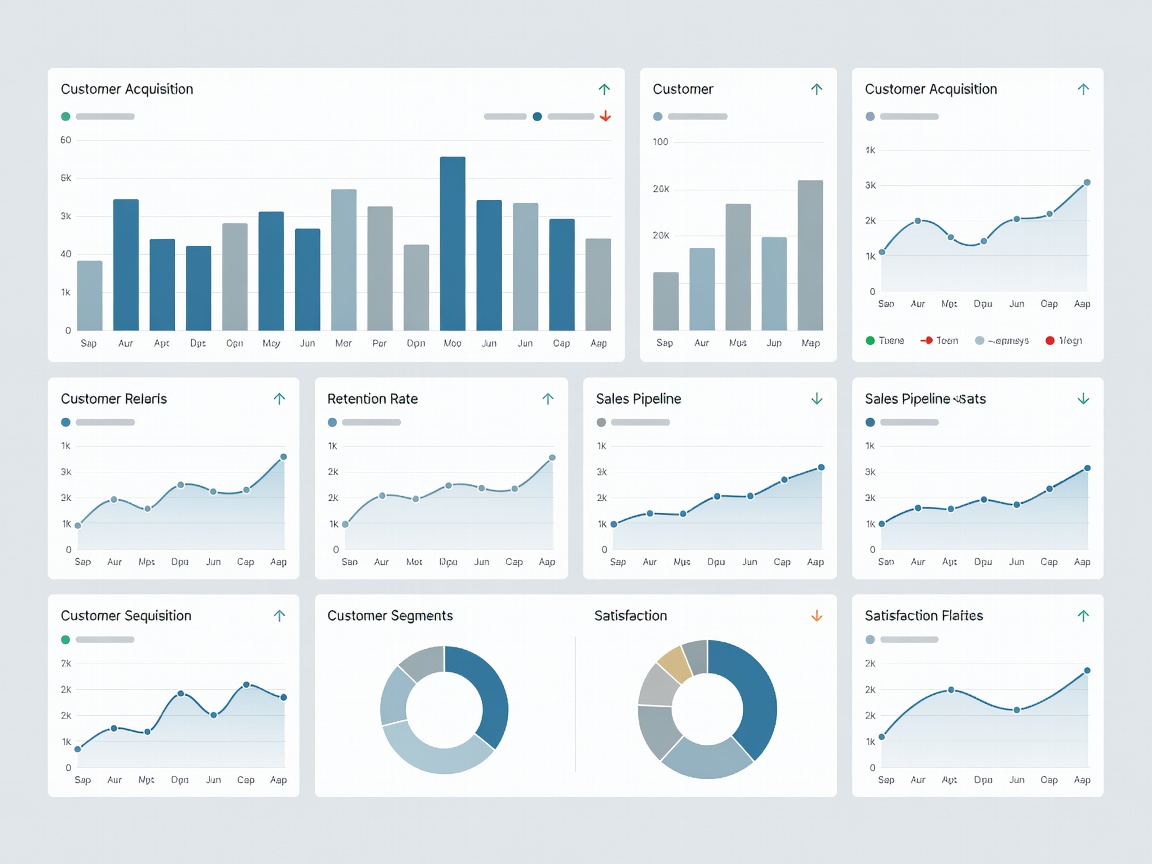
Customer Relationship Management systems operate as the central nervous system for sales, marketing, and customer success teams. In an era where customer experience dictates market leadership, relying on disjointed spreadsheets or fragmented communication channels guarantees a loss of revenue and retention.
The Evolution of Modern CRMs
Historically, CRMs functioned merely as digital rolodexes—static repositories of contact information. Today, they are dynamic, automated platforms that ingest data from multiple touchpoints to provide a 360-degree view of the customer journey.
Key Capabilities
- Pipeline Visualization: Track prospects as they move through specific deal stages, allowing sales leaders to forecast revenue accurately and identify bottlenecks in the conversion funnel.
- Omnichannel Tracking: Automatically log email threads, phone calls, support tickets, and social media interactions against the appropriate contact record, providing absolute context to any team member engaging with the client.
- Workflow Automation: Eliminate manual data entry through trigger-based actions. For example, automatically assign a lead to a specific territory rep when a form is submitted, or send a sequence of nurturing emails based on user behavior.
Bridging the Sales and Marketing Divide
One of the primary benefits of an enterprise-grade CRM is the alignment it creates between marketing and sales—often referred to as "smarketing." When both departments operate out of the same database, attribution models become precise. Marketing teams can see exactly which campaigns generated closed-won revenue, rather than merely counting top-of-funnel leads. Conversely, sales teams gain insight into exactly which marketing materials a prospect consumed before booking a demo.
Implementation Challenges to Avoid
Despite the immense value CRMs provide, implementation failure rates remain high due to easily avoidable pitfalls:
- Poor Data Hygiene: A CRM is only as valuable as the data within it. Without strict validation rules and deduplication processes, user trust in the system rapidly deteriorates.
- Over-Customization: Modifying the system to replicate broken legacy processes rather than adapting workflows to align with modern best practices.
- Lack of User Adoption: Forcing sales teams to navigate complex, non-intuitive interfaces. CRMs must save time for front-line workers, not act solely as a surveillance tool for management.
The Watchpatchcreewscb Approach to CRM
We architect CRM environments prioritizing user experience and data integrity. By designing streamlined layouts and building robust API integrations with your existing tech stack, we ensure your CRM becomes a seamless, indispensable tool for revenue generation rather than an administrative burden.